Little Known Family History

When one of my two remaining maternal cousins visited in August, during our conversation, we realized how little we knew about the family’s history.

Later, this led to the three of us planning a first-time reunion of the Outlaw Family Clan for Thanksgiving 2016.

As the remaining three elders, we plan to piece together what we can by:

  • reviewing information recorded in the family bible;
  • identifying photos in the family album; and
  • sharing memories and old photos.

Our goal is to capture and preserve as much family history as possible to pass down to future generations.

On a personal level, the eldest of the elders on both my paternal and maternal sides, I will continue to share my life experiences, via this blog.  Perhaps, one day, future generations will use what I write to piece together information for their family reunion.


image


My Blogging Break – Part Two: Lady C’s Visit

A Blogging Break in April and May freed up time for me to spend quality time with visiting family members.

Last week, in Part 1 of this three-part series, I shared a few of the fun and memorable experiences with our two granddaughters who visited us for seven days over their spring break.

Several weeks after leaving our eldest granddaughter, Lady C returned.  She re-arranged her schedule after learning that Hubby was on the wait list for surgery when an available slot became available on the neurosurgeon’s schedule.

Rather than sitting around and waiting for the hospital to call with an admission date, Hubby encouraged us to use this time to do some fun things together.  He reminded me that, as the post-surgery caregiver, I would be housebound for weeks following his discharge from the hospital.

So in Part 2 of this series, I share some of the special moments spent with my eldest granddaughter, Lady C.

Pottery Painting

One of the things Lady C wanted to do was pick up the pottery pieces we painted during her last visit.  We had left them at the pottery gallery to go through the last firing process.

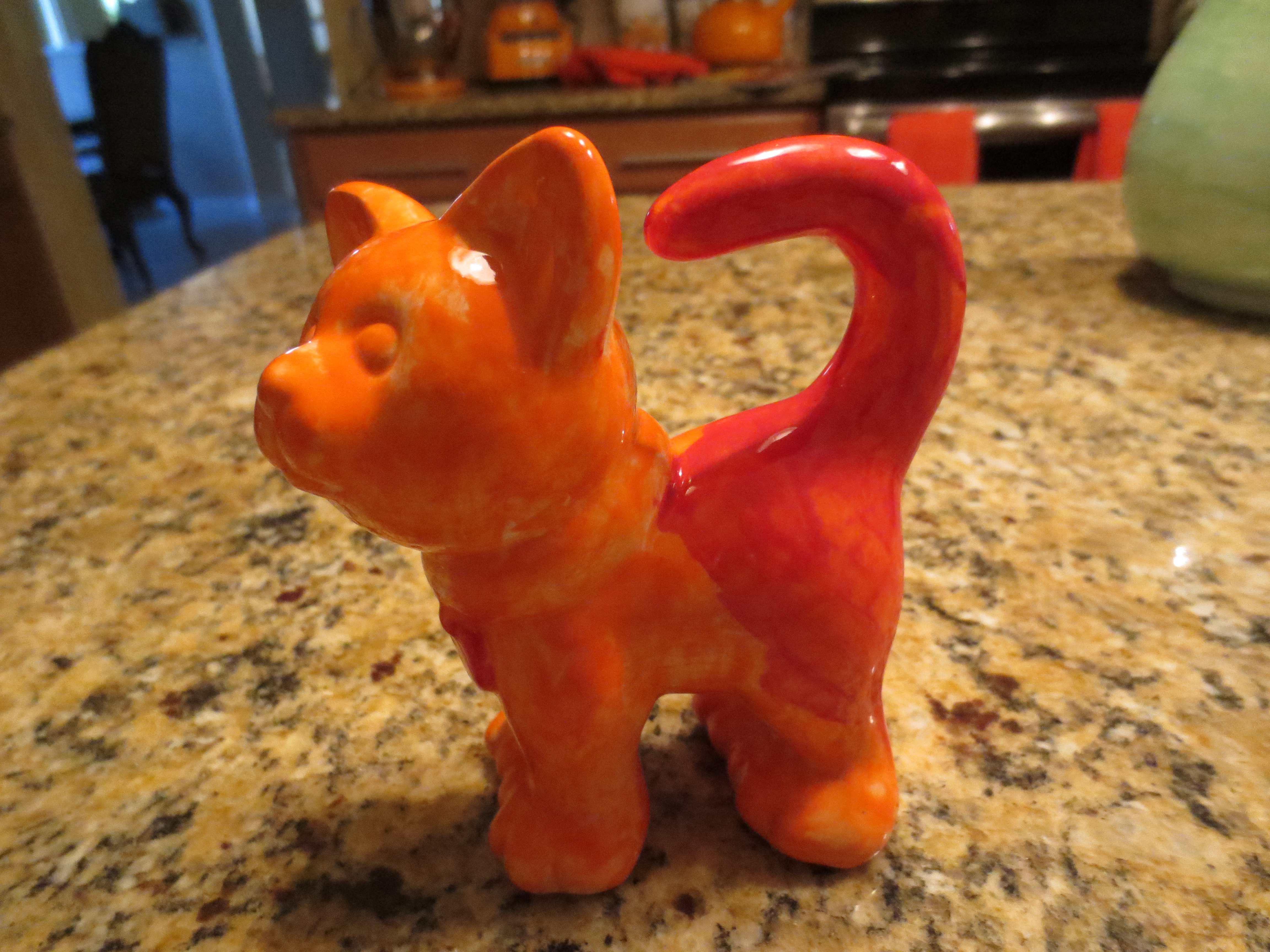
Both of us felt the pottery pieces looked beautiful after the firing.

IMG_0832
Cupcake’s Painted and Pottery Fired Cat
IMG_0834
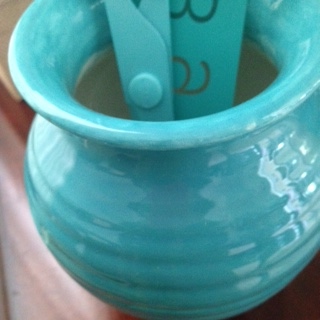
Lady C’s Painted and Pottery Fired Vase
IMG_0282
SeasonedSistahs2s Painted and Pottery Fired Vase

Pecan Resin Xmas Figurine Painting

Inspired by how well the pottery pieces turned out, we wanted to do more painting.

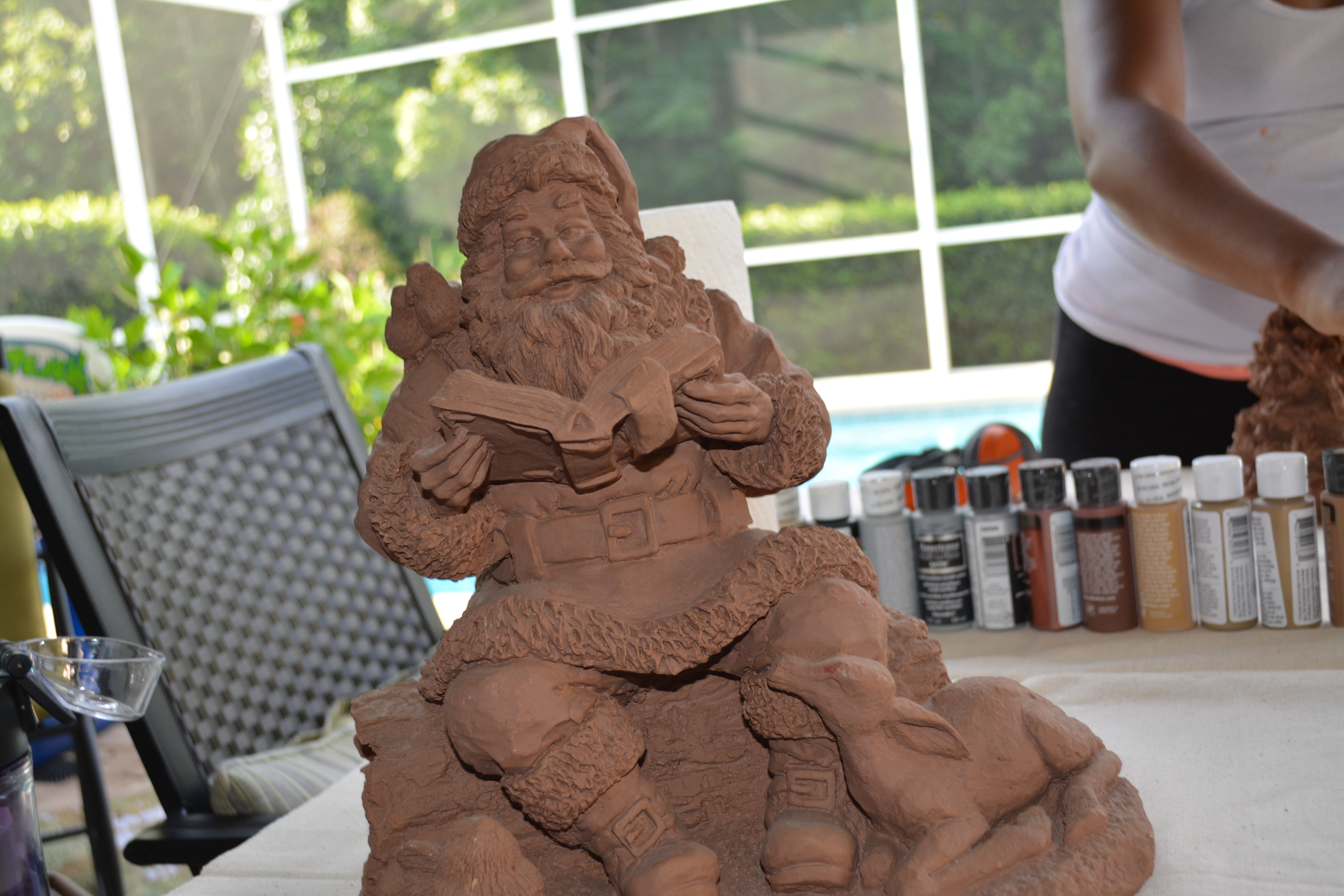
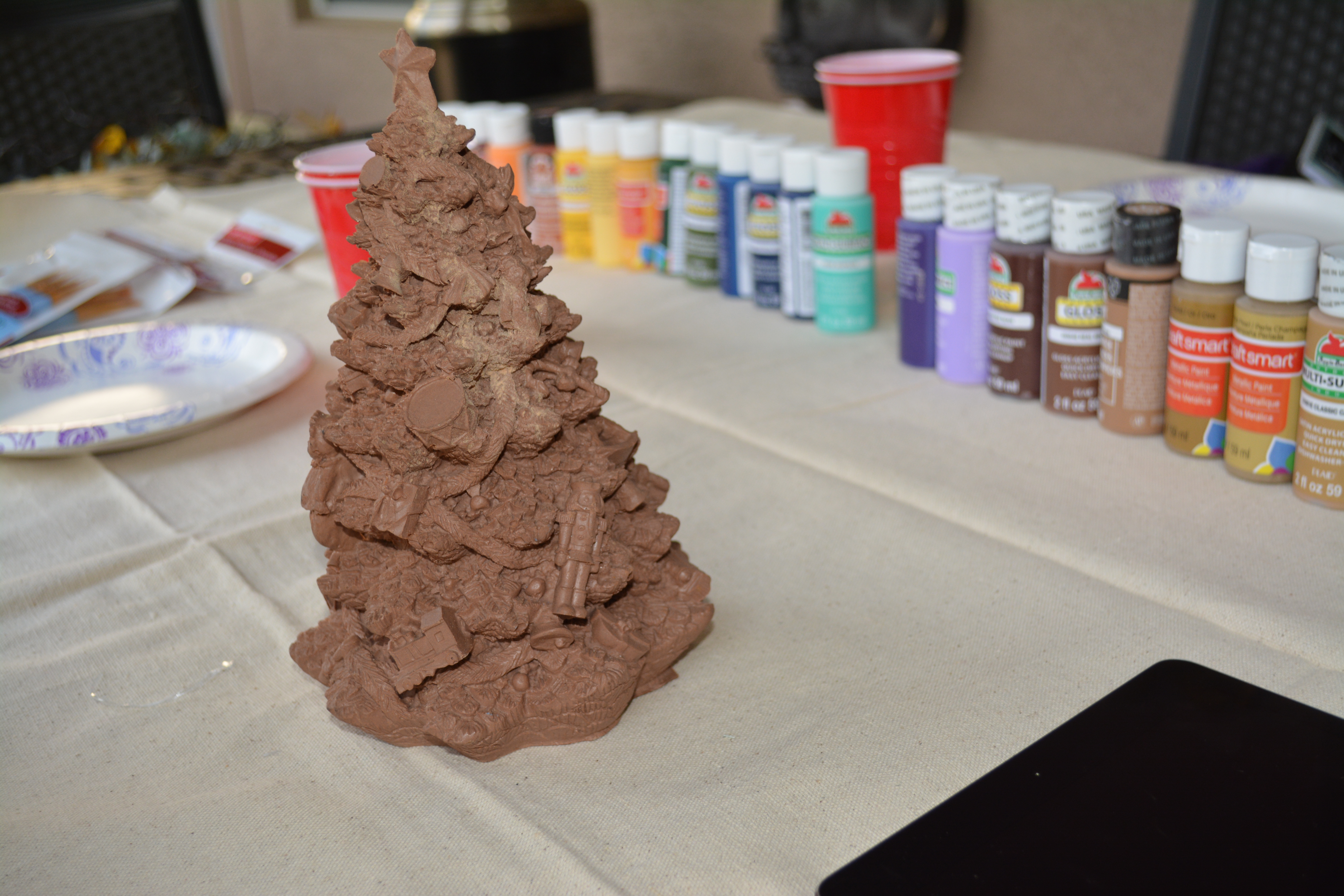
I telephoned my son and asked him to dig out a couple of the unpainted Xmas holiday pecan resin figurines stored in the basement of our home in Wisconsin.  I had purchased them in North Carolina at a flea market more than twenty years ago.  He sent seven figurines and these are the two that Lady C and I decided to paint.

DSC_0060
SeasonedSistah2 – Pecan Resin Santa Claus Painting Project
DSC_0058
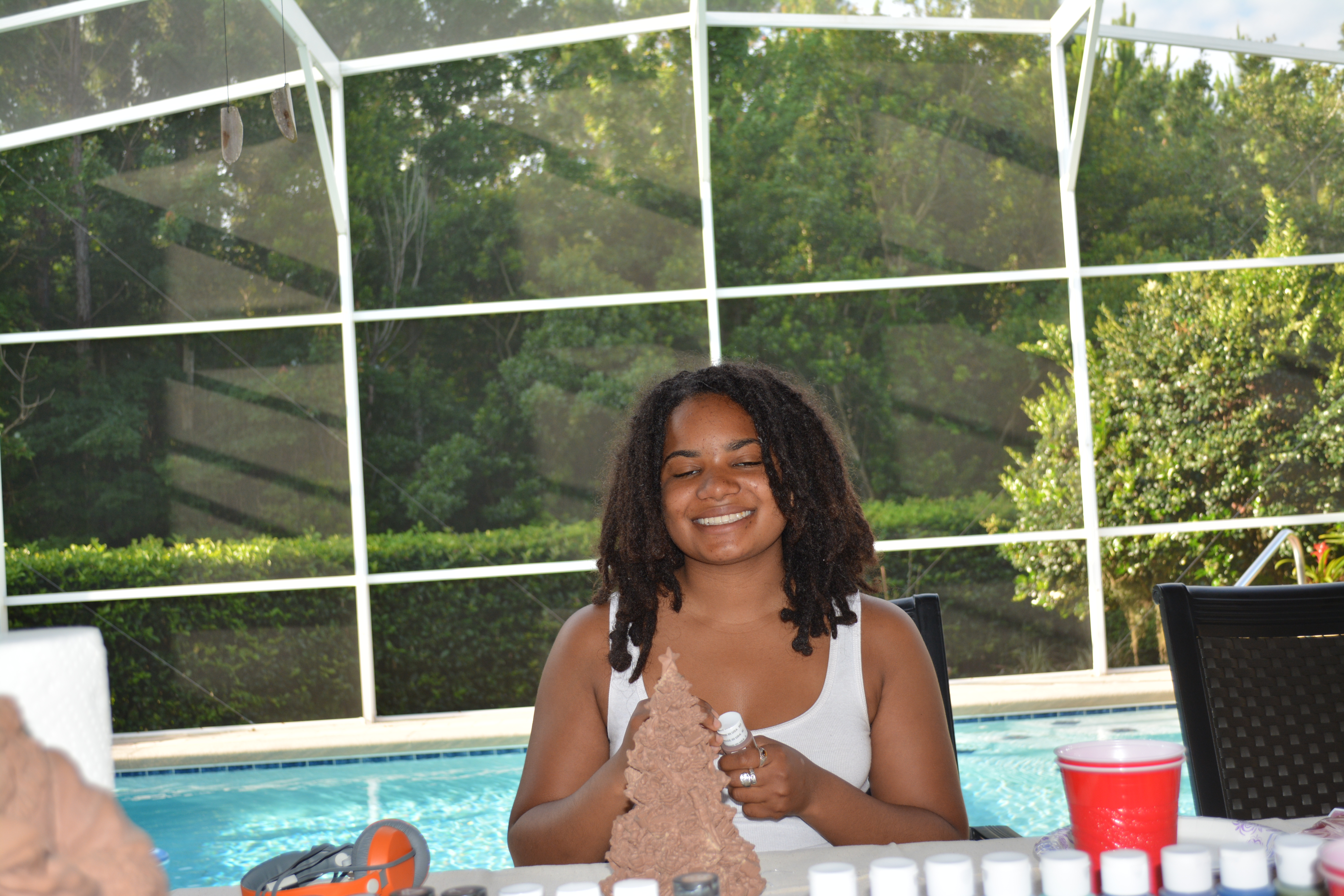
Lady C – Pecan Resin Xmas Tree Painting Project

We had fun painting on the lanai — the soft breezes, birds singing, rustling of trees and sharing memories of past times together.  Especially, the two-year period that I lived in North Carolina and provided child care for her while my eldest daughter completed her medical residency and fellowship training.

Lady C, even as a 3-years-old, loved to watch me paint.  She would tell me what colors to use and whether it was pretty or not.  When she felt I had painted long enough, she would say, “No more ‘bellishments” rather than embellishments.

DSC_0062

Lady C and Her Painting Project

This was Lady C’s first-ever attempt and my first attempt, after a 20+ year absent, at painting pecan resin figurines.  It will take us some time to finish our projects, but the goal is to have them on display when our family gathers in Florida for Christmas. Of course, I will share photos on this blog during the holidays.

Mustard and Turnip Greens

It has been a long tradition in our family to have mustard and turnip greens on the dinner table for special occasions; and, definitely every Christmas and Thanksgiving.

I picked, washed and cooked them until Xmas 2013 when the two daughters asked me to show them how.

IMG_5246
My Two Daughters Washing and Preparing Mustard and Turnip Greens Xmas 2013

On the day Lady C and I went to the Farmers Market, we came across a vendor selling locally grown mustard and turnip greens. And, she said, “I want you to show me how to cook greens, NanNan.”  We purchased enough for both Sunday’s dinner and to freeze for future meals.

Beautiful and memorable times are possible when we do the simplest things in the presence of our loved ones.  I connected and bonded with Lady C on an even higher level as she went through this new learning experience.

IMG_0098
Lady C Preparing Mustard and Turnip Greens to Cook

Dreadlocks Hair Styling Day

For more than two years, I have gone to this amazing Jamaican barber to cut my hair.  During most visits, I am entertained as I watch an awe a stylist in the shop who specializes in natural hair.  I am always amazed by the unique, complex and diverse art she creates on the heads of her clients.

I asked Lady C, who sports dreadlocks, if she wanted me to schedule her an appointment with the natural hair stylist.

She said, “Yes,” and off to the Jamaican hair shop we went.  While my haircut took 20-30 minutes, Lady C’s dreadlocks were under the care of this amazing natural hair stylist lasted for more than three hours.

IMG_0108
Lady C’s – Dreadlocks Hair Styling Day

Mother’s Day – Harry P. Leu Botanical Gardens

I received the gift of spending Mothers Day with the eldest child of my eldest child in one of my favorite places, The Leu Botanical Gardens.

This is the grandchild who shares my name and birthdate.

This is the grandchild, who despite our almost fifty year age difference, I am able to connect and relate to on many levels  — mindfulness, yoga, nutrition, meditations, inner peace, self-love, etc.

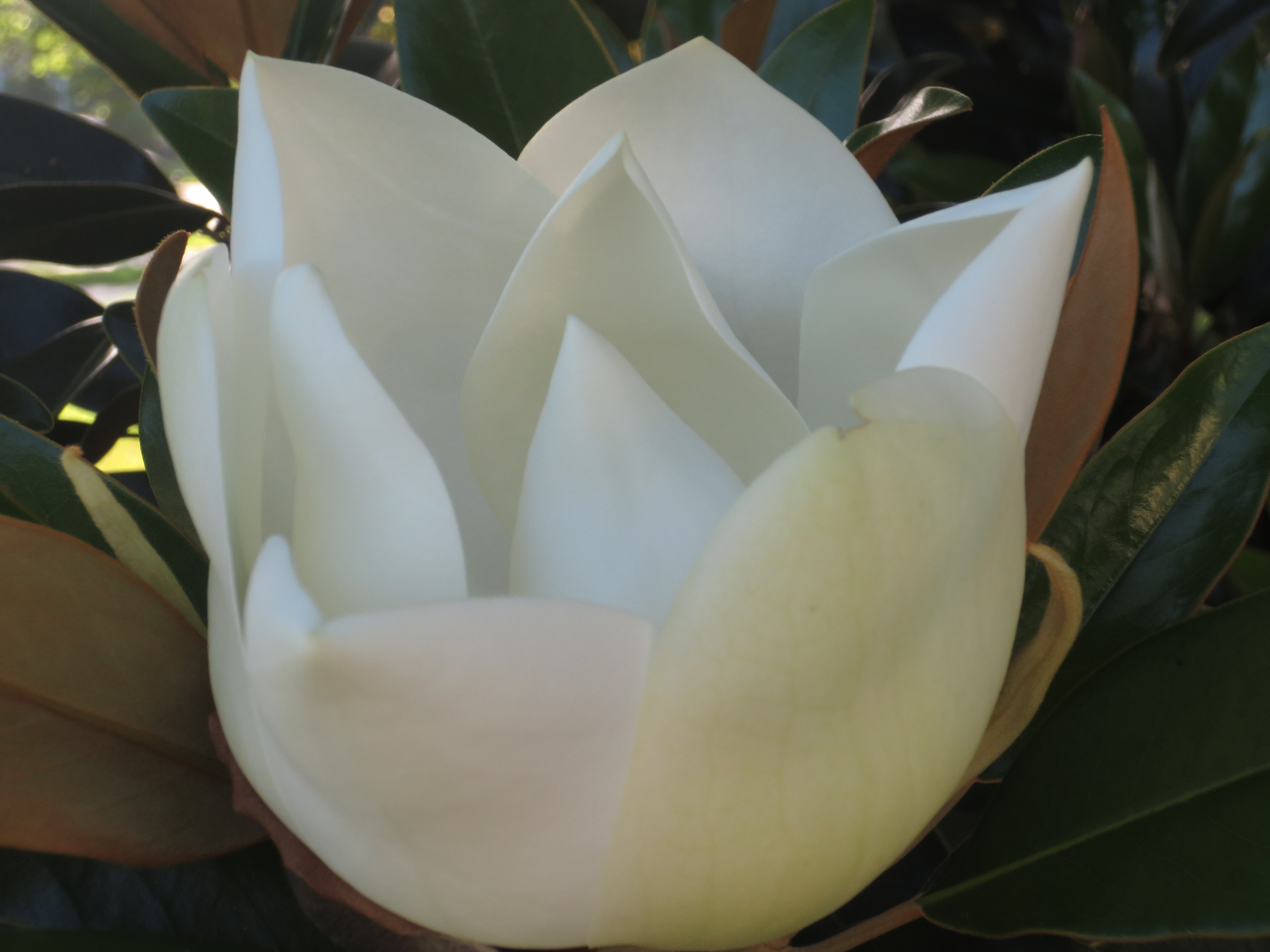
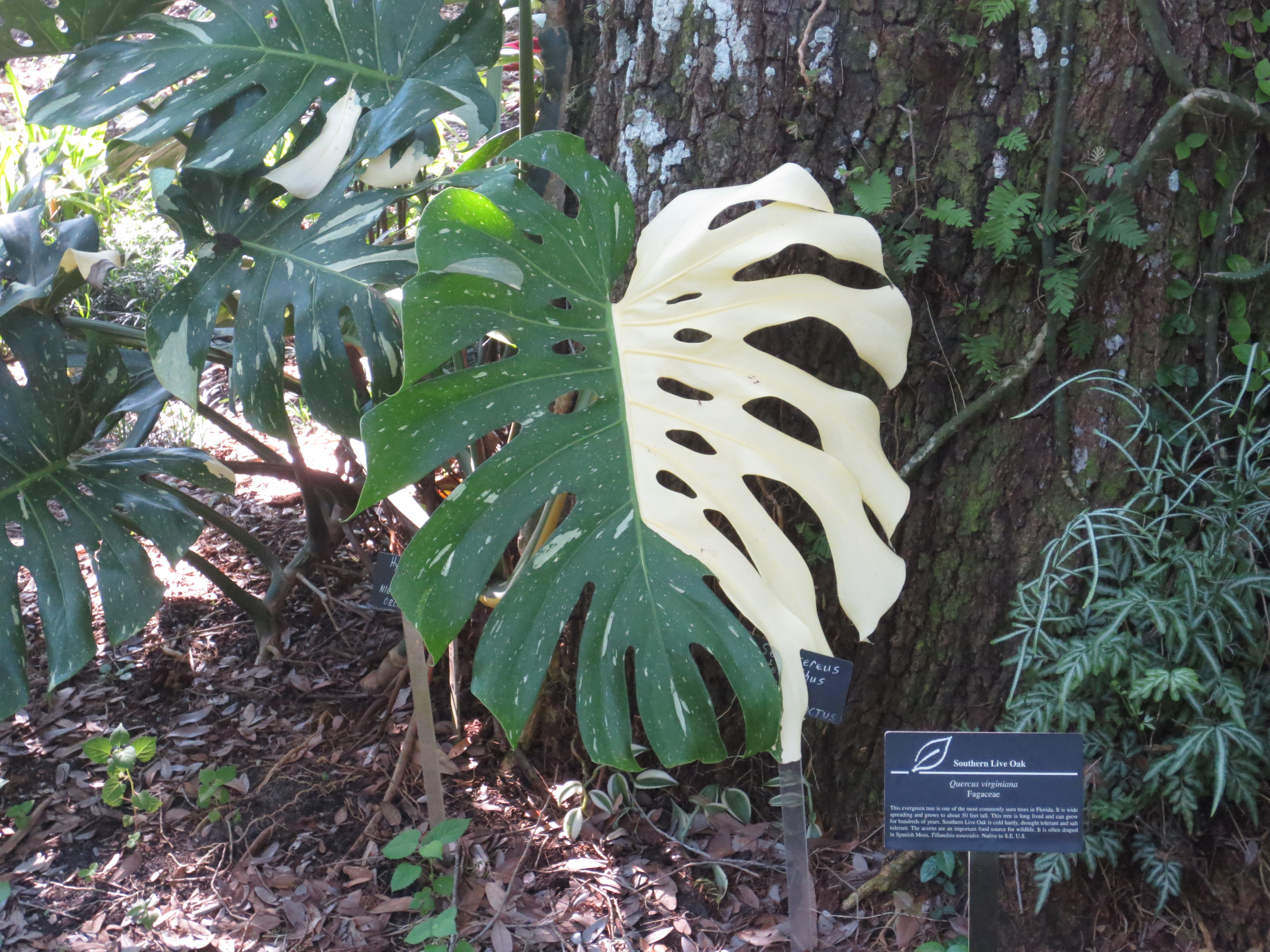
With encouragement and tips from Lady C, I, confidently, shot photo after photo with my Nikon 5200 digital camera of towering trees, blooming flowers, green foliage, and tropical plants.

Using my Canon point and shoot camera, Lady C took these photos.

IMG_0822
Photo by Lady C
IMG_0819
Photo by Lady C
IMG_0813
Photo by Lady C
IMG_0810
Lady C’s Photo

(Next Week – Part 3:  Hubby’s Surgery and Cousin’s Visit)

Writer’s Quote Wednesday 2015


writers-quote-wed-20151

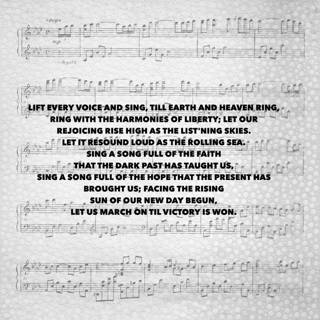
This week for Writer’s Quote, I selected the first stanza from the song, “Lift Every Voice and Sing,” which was originally written as a poem by James Weldon Johnson.  His brother, John, set the poem to music; and, it later became the anthem for the National Association for the Advancement of Colored People (NAACP).

IMG_0586-2
Designed by SeasonedSistah2 – Using the App: Word Swag Font and Typography Generator

The video below features Aretha Franklin, one of my favorite R&B and Gospel artists, performing “Lift Every Voice and Sing.”

ABOUT:  JAMES WELDON JOHNSON

IMG_0582
Designed by SeasonedSistah2 – Using the App: Canva Graphic Design and Photo Editing

Johnson is known as one of the creators and leaders of the Harlem Renaissance.  In addition to writing the poem, “Lift Every Voice and Sing,” he and his brother collaborated and wrote songs for over 200 broadway musicals.

During his lifetime, he published many stories and poems and was the author of two book:

  • God’s Trombones (1927),
  • The Autobiography of an Ex-Colored Man (1912)

In addition to his artistic talents, Johnson also gained recognition as an educator, lawyer, and civil rights activist.  President Theodore Roosevelt, in 1906, appointed Johnson to diplomatic positions in Venezuela and Nicaragua.

Upon his return to the United Stated, in 1914, he started working for the NAACP.  After retiring from there, he became the first African-American professor at New york University.

On June 26, 1938, Johnson died in a car accident.  More than two thousand people attended his funeral in Harlem.


New Project: Blog Reorganization

IMG_0072

Let me begin with a confession.  During my “3+ week blogging hiatus”, I didn’t  totally disconnect from the World of Blogosphere.

Our 55th Anniversary mini-vacation plans “went awry” when Hubby had a severe chronic pain flare-up. So I took this gift of unaccounted for time to critically look at my blog.  After reading the Daily Post’s “Perennial Favorites:  Working with Custom Menus” and Spring Cleaning: Reorganizing Your Blog”, I felt confident enough to move forward on a re-organization project.

Though still a work-in-progress, my goal is to improve the manageability and visibility of my blog by adding four new menu items:

  • Inspiring poems, music, quotes and books that uplifted me spiritually, mentally and emotionally.
  • Learning – interesting and informative articles and posts, written by others, which might be of interest to those who follow and/or read my blog.
  • Meandering – recording personal memories as well as present experiences of meanderings through more than 72+ years of living — both the negative and positive.
  • Photography – sharing my photos, a new and wanna be photographer, as I begin this new adventure to take photos of those things that peak my interest as well as those prompted by different photo challenges.

Once I add the subtitles under the new menus, I plan to  look at other blog improvement options.


Writer’s Quote Wednesday, 2015

writers-quote-wed-20151

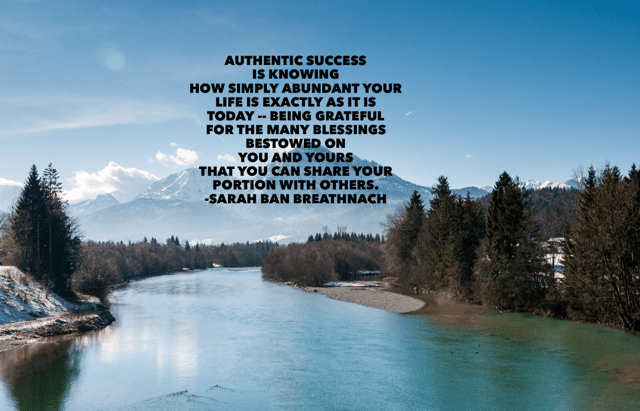
Thank you Silver Threading for hosting this event. This week, I selected a quote by author, Sarah Ban Breathnach.

photo 2

A close friend gifted me Breathnach’s book, “Simple Abundance” in the 1990s.  This was during a period in my life when I was in the throes of dealing with a newly diagnosed condition of Rheumatoid Arthritis. Depressed and devastated about having to leave a career that I had devoted tireless hours to building; I wasn’t open to embracing her theory.  Back then, I saw Breathnach and her book only as a popular read within my circle of friends.

Years later, I finally got it; and, since then, I read and re-read the essays in her book to remind myself how important it is to live simply and authentically.  Today, It is my go-to inspirational uplift.

photo 1


Writer’s Quote Wednesday 2015

I loved and embraced the poetry, books and quotes of African-American authors during the 70s.  But, the busyness of making a living as opposed to working toward living life to its fullest took me away from many of these gifted wordsmith’s until I found Writer’s Quote Wednesday 2015 hosted by Silver Threading.

writers-quote-wed-20151

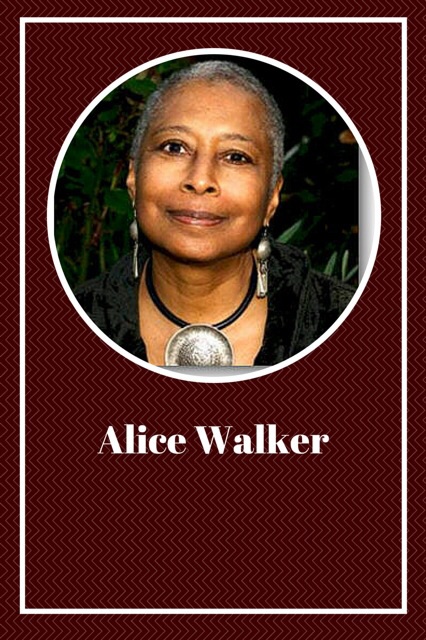
But, I never abandoned Alice Walker whose words ground and support when the mind, body and spirit is weak.

image
Birthdate – February 9, 1944

Women’s Rights Activist/Author/Civil Rights Activist is Walker’s self-defined occupation.  She has received many awards and recognitions for her:

  • Novels and Short Stories
  • Poetry
  • Non-Fiction Books
  • Essays

Favorite Book

In 1983, Walker won the Pulitzer Prize for Fiction for “The Color Purple.”  Three years later the story hit the movie screen and received eleven academy award nominations.

On December 1, 2005, the “Color of Purple” opened on Broadway.  Two years later Hubby, the children, grands and I went to New York City to see the production and celebrate my 65th as well as the eldest granddaughter’s 16th birthday.

Favorite Poem

Walker’s poem “For My People,” has been my “go to” when, I felt, unfairly judged, treated and/or demonized because of skin color.

A long poem addressing a lot, speaking to many, but I will only share three of my favorite passages.

“For my people everywhere singing their slave songs repeatedly, their dirges and their ditties and their blues and jubilees, saying their prayers nightly to an unknown God, bending their knees humbly to an unseen power.”

“For the cramped bewildered years we went to school to learn to know the reasons why and the answers to and the people who and the places where and the days when, in memory of the bitter hours when we discovered we were black and poor and small and different and nobody wondered and nobody understood.”

“For my people standing staring trying to fashion a better way from confusion, from hypocrisy and misunderstanding, trying to fashion a world that will hold all the people all the faces all the Adams and Eves and their countless generations; Let a new earth rise.  Let another world be born. Let a peace be written in the sky.  Let a people loving freedom come to growth.  Let a generation full of courage issue forth. Let freedom be the pulsing in our spirits and our blood.  Let the martial songs be written; let the dirges disappear. Let a race of men now rise and take control!”


Writer’s Quote Wednesday 2015

The opportunity to share a quote from authors who have inspired, uplifted, or enlightened me over my many years of living and reading is a beautiful thing.  And, I am grateful to Silver Threading for hosting her weekly event.

writers-quote-wed-20151

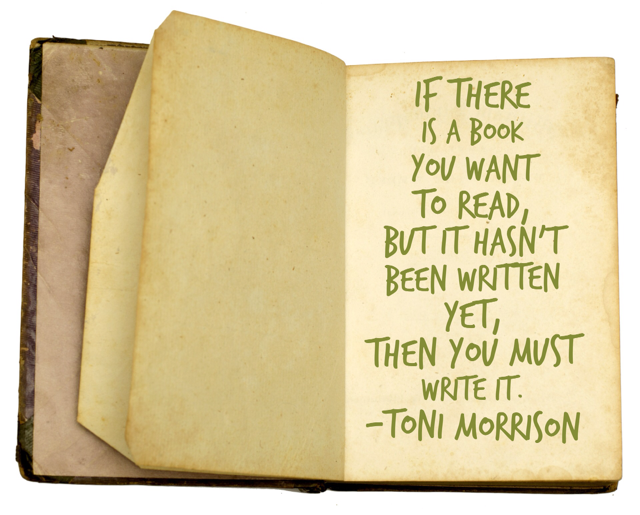
This week, I selected a quote by Toni Morrison:

photo

Toni Morrison is a well-known American novelist, editor, and professor.  Even though her work typically focuses on Black women, she does not define her it as feminist.

image

Morrison first novel, “The Bluest Eye,” was published in 1970.  There have been nine novels released since that time.  She released her last novel, “Home,” in 2012.  But, in 2015, a new novel, “God Help The Child,” will publish in 2015.  Her best known novels were:

  • The Bluest Eye
  • Song of Solomon
  • Beloved

For Beloved she received the:  Pulitzer Prize (1988)American Book Award (1988) and Nobel Prize in 1993.

Morrison, also, shared her gift of writing through:

  • Children’s Literature
  • Short Fiction
  • Operatic Words (Libretto)
  • Plays
  • Non-Fiction

Born in 1931, Morrison celebrated her 84th Birthday on February 18.

Freedom Friday – Black History Month: Part 3

The freedom to speak freely is not always free from repercussions.  When blogging friend, Imani, created Freedom Friday, I saw this as the first-step toward freeing me from ego and self-judgment about what I write, embrace, or critique on this blog.

With this newfound freedom every Friday, during Black History Month 2015, I chose to recognize an “unknown man” to many but a “Black Hero” to me.  The Hubby that I have loved and respected for almost fifty-five years, who stepped outside of his comfort zone, to write his first book, “The Son of A Sharecropper Achieves the American Dream.”  

The following are excerpts from his book of memoirs.

 Part 1  – Introduction:  February 6

Part 2 – Childhood in The Big House: February 13

Part 3

Coming of Age in Coahoma

After living on the Ralston plantation for about two or three years, we moved to another house on the Parker plantation in Coahoma.  I was about ten years old at the time.  This was exciting I had more kids to play with and I could go to town on the weekends.

Coahoma consisted of three general stores, three cafes, a dry goods store, a train station, a post office, a doctor’s office, two churches and a cotton gin.

As a teenager, I worked in the fields, babysit my sisters and brothers, and attended school.  I had begun working in the fields at age 5 or 6, chopping and picking cotton, but now I was getting paid.  I worked 10 hours a day to earn money for school clothes and other personal needs.  The rate was 25 cents an hour if you worked on the plantation where you lived, and 30 cents an hour if you worked off the plantation.

Going to the fields to chop cotton was a lot of fun.  It was extremely hard and dirty work, but it gave us an opportunity to enjoy our good friends, sing, tell jokes and trash talk.

From age 12-17, I worked five days a week, ten hours a day, for about eight or nine months of the year.  I was in school only four months of the year,

One could earn about $12.50 a week if you worked all five days, ten hours a day.  I gave some money to my parents and kept the rest.  Sometimes the owners would let the grownups work more days than the kids, so they could make as much money as they could to provide for their families, while the work lasted.

One week after working in the fields chopping cotton and getting paid, I took my fist bus ride by myself, a 13-mile trip to Clarksdale, Mississippi, a much larger town.  Clarksdale had many big stores and three movie houses.  The bus line only ran on Saturdays, at noon, five p.m., and 10 p.m.  If you missed the last bus, you had to walk home.  I couldn’t have been much older than 12 or 13, and I took this trip all by myself.  I watched a Class B western and bought a shirt for the first time in my life.  I remember the shirt was blue with pink designs, and I was surprised that it was a good fit.

On this trip I bought my first hamburger at the cafe on Issaquena Street.

During the summer of 1956, I met Yvonne Burks.  Yvonne was born in Mississippi but grew up in Chicago.  She was in Coahoma visiting her grandparents for the summer.

During her summer visits we went on hayrides and the annual community trip to the zoo in Memphis.  I can remember sitting on her grandparents front porch trying to be Mr. Big Stuff, rapping to her that the stars and the moon reminded me of the power of our love, how much she meant to me, and how our lives would come together as husband and wife when we were older and got married.

I met my father, Willie Brown, for the first time when I was 15, in 1957.  One day he and his wife showed up in Coahoma, where he had grown up as a kid.  He was in the army and was en route back to Chicago.  I was in school and some people came in the classroom and said my father was out there and wanted to see me.  I went out and he introduced himself.

It was such a shock, I didn’t now how to deal with it.  I was happy that he was here, but at the same time I never expected to see him.  He showed up at my school, without writing, sending a smoke signal, or some other form of communication.  You do not walk up to a 15-year-old and say, “Hey boy I’m your daddy.”  You must remember that I had not heard from him or spoke with this man during my entire life.

We talked and got in his car.  He drove me home and visited with my mother and stepfather.  He talked about his army career in World War II and Korea.  He gave me an old pair of army tennis shoes, and the next day he left.  I didn’t see him again until I moved to Chicago in 1959.  I stayed in touch with my biological father from time to time, until he passed away in 1970 from throat cancer.

When I finished the 9th grade, I enrolled at Agriculture High School, located outside of Clarksdale.  Aggie was the only school and junior college that Blacks could attend in Coahoma County, Mississippi.

I played on the basketball team.  This created a problem for me because all of the games were held at night and I didn’t haves a ride home.  If you didn’t have a car your only transportation was the school bus.  If I wasn’t lucky enough to catch a ride after the game with a kid who was using his parent’s car, I was forced to sleep illegally in the back of the gymnasium on a dirty mat with no covers.  When I got up the next morning, I had no soap, toothbrush or toothpaste.  If I wanted to eat breakfast, I had to sneak into the cafeteria.  The coach let me get away with it for a while, but told me I would have to pay for breakfast.

You have no idea how hard life can be when you’re poor.  In high school everyone was poor.  We had no means of income during the non-farming season.  Sometimes a bus would come by from Florida to pick up people for migrant work, but that was it.  There was no other work.

There were days I went hungry in school.  I’d stand outside the lunchroom and beg for nickels and dimes from the kids coming out of the cafeteria.

In next Friday’s post, I will share His Story about Chicago and Joining The Army.

 

Freedom Friday – Black History Month: Part 2

Introduction

Thanks to my blogging friend, Imani, for Freedom Friday. This  year for Black History Month, I chose to use my four Freedom Fridays in February to share excerpts from Hubby’s published memoirs, “The Son of A Sharecropper Achieves the American Dream.”

Last week, I posted Part 1 of this four-part series and, as promised, this week I share excerpts from the book about his early childhood.

Childhood in The Big House

“Shortly after my birth, the plantation owner acquired some additional land and a 13-room house from a white man named Mr. Morris.  This was the largest house on the plantation and my grandfather was asked to move his family into it.  We called it the “Big House.”  Even though we had no indoor plumbing, this house was far better than other sharecropper homes, which were basically two or three-room shacks.  They had roofs made of corrugated tin, and the floorboards had enough space between them that you could see the dogs and chickens running under the house.

On Christmas Eve all the sharecropping families who lived on the Ralston Plantation would gather on the boss man’s front lawn and wait for his wife, Miss Blanche, to hand out gift bags to each family.  The children got a brown bag with one orange, one apple, several loose pieces of rock candy, and mixed nuts in the shell.  We didn’t get any toys.  This may seem like nothing to the average person, but when you were as poor as we children were, growing up in the south during what I call “the second phase of slavery,” a present like this was a big deal.  

When I was six or seven years old my mother married L.C. Childress, who became my stepfather.  

I had mixed feelings about him, I knew he wasn’t my biological father, but I loved this man who was there for me when I needed a father figure in my life.  Maybe he wasn’t the perfect father, but he did the best he knew how, and for that I am ever grateful to him.  

He wasn’t an educated man, but he was hard-working and modestly artistic.  He built me a wagon made of wood and taught me how to make wooden tee toddlers and tractors from hay baling wire.  

My mother and stepfather had to work in the fields gathering the crops so my sister Shirley and I had to take turns babysitting the younger children.  She would go to school one day while I did the baby-sitting, and the next day we switched.  I was in the fourth grade at the time.  At the end of the school year she graduated to the next grade and I was left behind.  We were told that I needed a minimum number of days to graduate.  My sister qualified on the number and I was one day short.  This was devastating to me.  As a result, I was always one grade behind my age group in school.  

When I was about 9 or 10 years old, something unusual happened.  A group of white people came to my elementary school.  All of the students were asked to stand in line and give blood.  Many years later, I learned they were from the Mississippi Department of Health.

Approximately two weeks following their visit, we received a letter stating that my mother and I had to report for treatment in Meridian, Mississippi.  A special bus picked us up in Coahoma along with a number of other people, some familiar and others I had never seen.  I was scared to death.  My mother tried to explain by telling me I had “bad blood.”  I sill did not understand why we were on this old raggedy bus to  a town I had never heard of.  What was this bad blood?

We traveled all that day.  It was a traumatic experience.  At days end we finally arrived at an old decommissioned army base.  They gave me two sheets, a pillowcase, and a blanket.  I was a 9-year-old living in a large army barrack without my mother or any other family member.  A situation like this was ripe for a young kid to be molested.  Thank God it didn’t happen to me.

I was really afraid when they took me to the infirmary.  They had me sit on a clinic stool, lay my head on the table,  and gave me a spinal tap and lollipop.

One week later, we were on the same raggedy bus heading home.  I learned that my mother’s test came out negative. She didn’t have to take those shots.  How could a nine-year-old who was not sexually active have “bad blood”?  Where did I get this “bad blood”?  What did these white people do to me? Was I part of some type of Tuskegee experiment?  Since then, there have been times when my blood tests have been positive.  Other times, they have been negative.

My early “bad blood” experience has never been explained.   I pray that I was not part of some nefarious experiment by our government.

In next Friday’s post, I will share HIS STORY about COMING OF AGE IN COAHOMA 

Writer’s Quote Wednesday 2015

Thank you to Silver Threading for hosting this weekly event.

writers-quote-wed-20151

My  Writer’s Quote this week is one by Gwendolyn Brooke:

 “What I’m fighting for now in my work … for an expression relevant to all manner of blacks, poems I could take into a tavern, into the streets, into the halls of a housing project.”

1

The first African-American to win a Pulitzer Prize in 1950, Brooke published her first book of poetry in 1945.

Her awards and recognitions are many including a 1962 invitation from President John F. Kennedy to read at a poetry festival being held at the Library of Congress.

Though ten years younger and we never met; I grew up in Chicago, we lived in the same neighborhood, and we attended the same school (Englewood).

Yet, I didn’t connect with this distinguished, gifted and talented writer until 1970 as a college freshman.

Sadly, in the 1950s, the Chicago Public School System did not include the literary works of  Gwendolyn Brooke in their curriculum.  At least, on the South Side of Chicago where I grew up.

Gwendolyn Brooke died on December 3, 2000 at the age of 83.  The gift of her poetic words remain for us to share and reflect upon for generations to come.


Health and Wellness Associates

Shared Decision Concept in Your Healthcare

Birthing Rainbows

Sometimes There Are Rainbows After Rain

The Oily Guru

Aromatherapy and life

Natalie Breuer

Natalie. Writer. Photographer. Etc.

Ramblings of a Writer

Living the Path of Life

scottishmomus

What I See

hometogo232

A place of Love and Security

Social Justice For All

Working towards global equity and equality

Robby Robin's Journey

Reflections of an inquiring retiree ...

WGN-TV

Chicago's Very Own source for breaking news, weather, sports and entertainment.

WARE I'M COMING FROM

BARE ALL: THE TRUTH IS BETTER NAKED.

Atypical 60

A Typical Blog. A Typical Woman. A Typical Take On Life. With An Atypical Twist!

writing for self-discovery

creating a life that fits like skin

Haddon Musings

There are 11,507 stories in Haddonfield; this is one of them.

Share Your Light

You are a miracle - Let it happen

M J Mallon YA Author and Poet

Kyrosmagica Publishing - The Magical Home of Books, Writing, Poetry, Photography and Inspiration

Cathy Lynn Brooks

Let me tell you Justine's story

Poesy Perspectives

embrace the magic

willowdot21

An insight to a heart mind and soul.

mindjobusinessdotcom.wordpress.com/

Self Love Enthusiast. Dating Inquisitive. Lover of All Things Positive.

Treat Yourself to a Journaling Adventure

journal prompts, memoir, art, poetry for the verbose and the introverted

Miscellaneous & Recommendations

This WordPress.com site is great for bloggers and readers.

When Timber Makes One Still

"Everyone needs beauty as well as bread, places to play in and pray in, where nature may heal and give strength to the soul" -John Muir

Reymon de Real Photography

My favorite hobby is capturing the beauty around me.

vanbytheriver

Living Life. Paying Attention.

A Black Rose

A Safe Haven for Silent Voices

Sights & Insights

By L de Godoy

Tourmaline .

Small Scale Fabricated Photography, Toy Photography History, Art Creation Musings

Teaching No Talking

"Look deep into nature, and then you will understand everything better" ~Albert Einstein

Life As An Art Form

Quips & Commentaries in Prose and Poetry

Through Open Lens

Home of Lukas Kondraciuk Photography

LEANNE COLE

Trying to live a creative life

Nik's Place

A place for words to chill...

SueBee Arts

A repository for my adventures, arts, photos

Critical Dispatches

Reports from my somewhat unusual life

Nikki Skies

I am a lover of perseverance. I am folklore. I am consistency and contradiction.

Good Woman

Threads of My Life

Expressing my vision

A journey into creativity

Angela Seager Images

Travel Images and Beyond....