Freedom Friday – Black History Month: Part 3

The freedom to speak freely is not always free from repercussions.  When blogging friend, Imani, created Freedom Friday, I saw this as the first-step toward freeing me from ego and self-judgment about what I write, embrace, or critique on this blog.

With this newfound freedom every Friday, during Black History Month 2015, I chose to recognize an “unknown man” to many but a “Black Hero” to me.  The Hubby that I have loved and respected for almost fifty-five years, who stepped outside of his comfort zone, to write his first book, “The Son of A Sharecropper Achieves the American Dream.”  

The following are excerpts from his book of memoirs.

 Part 1  – Introduction:  February 6

Part 2 – Childhood in The Big House: February 13

Part 3

Coming of Age in Coahoma

After living on the Ralston plantation for about two or three years, we moved to another house on the Parker plantation in Coahoma.  I was about ten years old at the time.  This was exciting I had more kids to play with and I could go to town on the weekends.

Coahoma consisted of three general stores, three cafes, a dry goods store, a train station, a post office, a doctor’s office, two churches and a cotton gin.

As a teenager, I worked in the fields, babysit my sisters and brothers, and attended school.  I had begun working in the fields at age 5 or 6, chopping and picking cotton, but now I was getting paid.  I worked 10 hours a day to earn money for school clothes and other personal needs.  The rate was 25 cents an hour if you worked on the plantation where you lived, and 30 cents an hour if you worked off the plantation.

Going to the fields to chop cotton was a lot of fun.  It was extremely hard and dirty work, but it gave us an opportunity to enjoy our good friends, sing, tell jokes and trash talk.

From age 12-17, I worked five days a week, ten hours a day, for about eight or nine months of the year.  I was in school only four months of the year,

One could earn about $12.50 a week if you worked all five days, ten hours a day.  I gave some money to my parents and kept the rest.  Sometimes the owners would let the grownups work more days than the kids, so they could make as much money as they could to provide for their families, while the work lasted.

One week after working in the fields chopping cotton and getting paid, I took my fist bus ride by myself, a 13-mile trip to Clarksdale, Mississippi, a much larger town.  Clarksdale had many big stores and three movie houses.  The bus line only ran on Saturdays, at noon, five p.m., and 10 p.m.  If you missed the last bus, you had to walk home.  I couldn’t have been much older than 12 or 13, and I took this trip all by myself.  I watched a Class B western and bought a shirt for the first time in my life.  I remember the shirt was blue with pink designs, and I was surprised that it was a good fit.

On this trip I bought my first hamburger at the cafe on Issaquena Street.

During the summer of 1956, I met Yvonne Burks.  Yvonne was born in Mississippi but grew up in Chicago.  She was in Coahoma visiting her grandparents for the summer.

During her summer visits we went on hayrides and the annual community trip to the zoo in Memphis.  I can remember sitting on her grandparents front porch trying to be Mr. Big Stuff, rapping to her that the stars and the moon reminded me of the power of our love, how much she meant to me, and how our lives would come together as husband and wife when we were older and got married.

I met my father, Willie Brown, for the first time when I was 15, in 1957.  One day he and his wife showed up in Coahoma, where he had grown up as a kid.  He was in the army and was en route back to Chicago.  I was in school and some people came in the classroom and said my father was out there and wanted to see me.  I went out and he introduced himself.

It was such a shock, I didn’t now how to deal with it.  I was happy that he was here, but at the same time I never expected to see him.  He showed up at my school, without writing, sending a smoke signal, or some other form of communication.  You do not walk up to a 15-year-old and say, “Hey boy I’m your daddy.”  You must remember that I had not heard from him or spoke with this man during my entire life.

We talked and got in his car.  He drove me home and visited with my mother and stepfather.  He talked about his army career in World War II and Korea.  He gave me an old pair of army tennis shoes, and the next day he left.  I didn’t see him again until I moved to Chicago in 1959.  I stayed in touch with my biological father from time to time, until he passed away in 1970 from throat cancer.

When I finished the 9th grade, I enrolled at Agriculture High School, located outside of Clarksdale.  Aggie was the only school and junior college that Blacks could attend in Coahoma County, Mississippi.

I played on the basketball team.  This created a problem for me because all of the games were held at night and I didn’t haves a ride home.  If you didn’t have a car your only transportation was the school bus.  If I wasn’t lucky enough to catch a ride after the game with a kid who was using his parent’s car, I was forced to sleep illegally in the back of the gymnasium on a dirty mat with no covers.  When I got up the next morning, I had no soap, toothbrush or toothpaste.  If I wanted to eat breakfast, I had to sneak into the cafeteria.  The coach let me get away with it for a while, but told me I would have to pay for breakfast.

You have no idea how hard life can be when you’re poor.  In high school everyone was poor.  We had no means of income during the non-farming season.  Sometimes a bus would come by from Florida to pick up people for migrant work, but that was it.  There was no other work.

There were days I went hungry in school.  I’d stand outside the lunchroom and beg for nickels and dimes from the kids coming out of the cafeteria.

In next Friday’s post, I will share His Story about Chicago and Joining The Army.

 

Writing 201 – Poetry

Assignment

“Today’s word is trust write a poem in which you address, reflect on, or tell a story about the feeling of trusting or being trusted by another (person, animal, object, potted plant…).  Or about distrusting them (or not being trusted yourself).”

Bright sunny morning, yesterday.

Rested great the evening before.

Even positive of outcome today.

After five years, no recurrence.

Satisfied mammogram clear and okay.

Trust broken image not clear today.

Sadly, breasts may not be okay!

Prompted by a suggestion from fellow blogger, Karuna, to participate in Writing 201-Poetry, I printed down Day 3’s Assignment this morning.

First, “what the heck is meant by acrostic“?  Googled and found the answer and said to Hubby, “Oh I did something like that, and didn’t even know it, shortly after Chelsea was born.”

Chelsea Yvonne is our 23-year-old granddaughter.

Image 11

I was so overjoyed with the birth of this beautiful new baby, with my name and birthday, that I created what I thought, at the time, was a poetic Welcome New Baby Card:

Cuddly

Huggable

Enchanting

Lovable

Sweetheart

Embraced, and

Adored

This stab at poetry twenty-three years ago as well as this assignment today are my poetic words written from the heart.

Writer’s Quote Wednesday 2015

Thank you to Silver Threading for hosting this event.

writers-quote-wed-20151

I selected Langston Hughes for this week’s writer’s quote:

photo

Born on February 1, 1902, Hughes first poem, “The Negro Speaks of Rivers,” published in 1921; and, his last poem, “Panther and the Lash,” posthumously published in 1967.

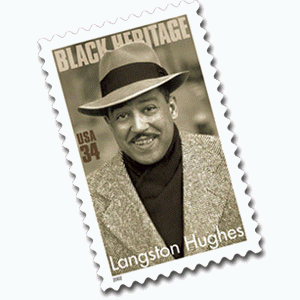
hughes_stamp
2002 – The United States Postal Service Added the Image of Langston Hughes to its Black Heritage Series of Postage Stamps

For over four decades, Hughes’ portrayed the life of Blacks in America through:

  • Poetry
  • Novels
  • Short Stories,
  • Non-Fiction Books
  • Plays
  • Children’s Books

One of my favorite poems is “I Dream A World.”

I dream a world where man

No other man will scorn,

Where love will bless the earth

And peace its paths adorn

I dream a world where all

Will know sweet freedom’s way,

Where greed no longer saps the soul

Nor avarice blights our day.

A world I dream where black or white,

Whatever race you be,

Will share the bounties of the earth

And every man is free

Where wretchedness will hang its head

And joy, like a pearl,

Attends the needs of all mankind

Of such I dream, my world.

I continue to dream that one day, despite our gender, ethnic, religious and cultural differences, we all will live together in peace, joy and happiness.

Weekly Photo Challenge – February 13, 2015

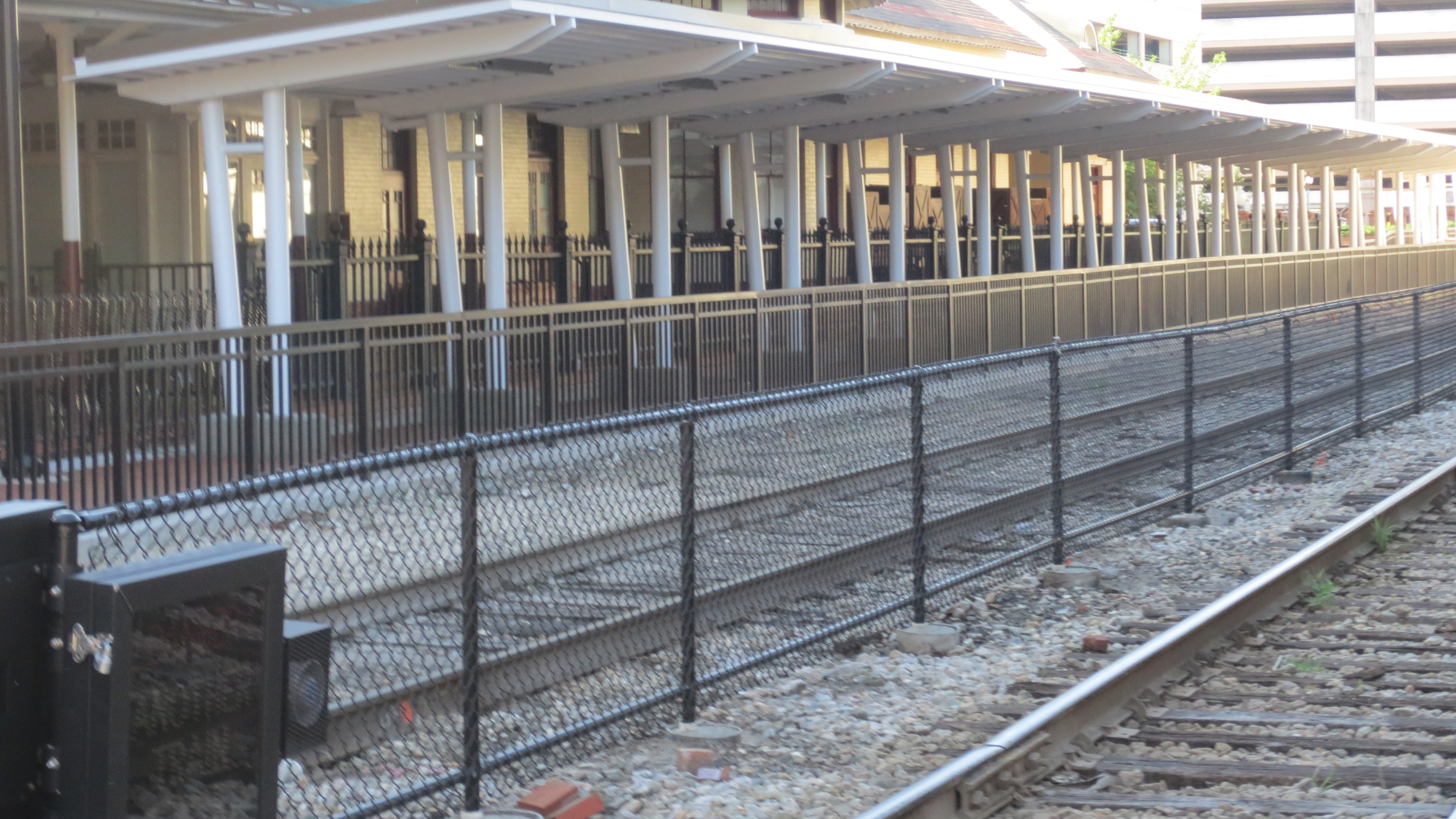
Symmetry

“Symmetry (noun):  The quality of something that has two halves that has two sides or halves that are the same or very close in size, shape, and position; the quality of having symmetrical parts.”

IMG_0117


Church Street Station

Downtown – Orlando Florida

Historic U.S. Railroad Depot

Freedom Friday – Black History Month: Part 2

Introduction

Thanks to my blogging friend, Imani, for Freedom Friday. This  year for Black History Month, I chose to use my four Freedom Fridays in February to share excerpts from Hubby’s published memoirs, “The Son of A Sharecropper Achieves the American Dream.”

Last week, I posted Part 1 of this four-part series and, as promised, this week I share excerpts from the book about his early childhood.

Childhood in The Big House

“Shortly after my birth, the plantation owner acquired some additional land and a 13-room house from a white man named Mr. Morris.  This was the largest house on the plantation and my grandfather was asked to move his family into it.  We called it the “Big House.”  Even though we had no indoor plumbing, this house was far better than other sharecropper homes, which were basically two or three-room shacks.  They had roofs made of corrugated tin, and the floorboards had enough space between them that you could see the dogs and chickens running under the house.

On Christmas Eve all the sharecropping families who lived on the Ralston Plantation would gather on the boss man’s front lawn and wait for his wife, Miss Blanche, to hand out gift bags to each family.  The children got a brown bag with one orange, one apple, several loose pieces of rock candy, and mixed nuts in the shell.  We didn’t get any toys.  This may seem like nothing to the average person, but when you were as poor as we children were, growing up in the south during what I call “the second phase of slavery,” a present like this was a big deal.  

When I was six or seven years old my mother married L.C. Childress, who became my stepfather.  

I had mixed feelings about him, I knew he wasn’t my biological father, but I loved this man who was there for me when I needed a father figure in my life.  Maybe he wasn’t the perfect father, but he did the best he knew how, and for that I am ever grateful to him.  

He wasn’t an educated man, but he was hard-working and modestly artistic.  He built me a wagon made of wood and taught me how to make wooden tee toddlers and tractors from hay baling wire.  

My mother and stepfather had to work in the fields gathering the crops so my sister Shirley and I had to take turns babysitting the younger children.  She would go to school one day while I did the baby-sitting, and the next day we switched.  I was in the fourth grade at the time.  At the end of the school year she graduated to the next grade and I was left behind.  We were told that I needed a minimum number of days to graduate.  My sister qualified on the number and I was one day short.  This was devastating to me.  As a result, I was always one grade behind my age group in school.  

When I was about 9 or 10 years old, something unusual happened.  A group of white people came to my elementary school.  All of the students were asked to stand in line and give blood.  Many years later, I learned they were from the Mississippi Department of Health.

Approximately two weeks following their visit, we received a letter stating that my mother and I had to report for treatment in Meridian, Mississippi.  A special bus picked us up in Coahoma along with a number of other people, some familiar and others I had never seen.  I was scared to death.  My mother tried to explain by telling me I had “bad blood.”  I sill did not understand why we were on this old raggedy bus to  a town I had never heard of.  What was this bad blood?

We traveled all that day.  It was a traumatic experience.  At days end we finally arrived at an old decommissioned army base.  They gave me two sheets, a pillowcase, and a blanket.  I was a 9-year-old living in a large army barrack without my mother or any other family member.  A situation like this was ripe for a young kid to be molested.  Thank God it didn’t happen to me.

I was really afraid when they took me to the infirmary.  They had me sit on a clinic stool, lay my head on the table,  and gave me a spinal tap and lollipop.

One week later, we were on the same raggedy bus heading home.  I learned that my mother’s test came out negative. She didn’t have to take those shots.  How could a nine-year-old who was not sexually active have “bad blood”?  Where did I get this “bad blood”?  What did these white people do to me? Was I part of some type of Tuskegee experiment?  Since then, there have been times when my blood tests have been positive.  Other times, they have been negative.

My early “bad blood” experience has never been explained.   I pray that I was not part of some nefarious experiment by our government.

In next Friday’s post, I will share HIS STORY about COMING OF AGE IN COAHOMA 

Writer’s Quote Wednesday 2015

Thank you to Silver Threading for hosting this weekly event.

writers-quote-wed-20151

My  Writer’s Quote this week is one by Gwendolyn Brooke:

 “What I’m fighting for now in my work … for an expression relevant to all manner of blacks, poems I could take into a tavern, into the streets, into the halls of a housing project.”

1

The first African-American to win a Pulitzer Prize in 1950, Brooke published her first book of poetry in 1945.

Her awards and recognitions are many including a 1962 invitation from President John F. Kennedy to read at a poetry festival being held at the Library of Congress.

Though ten years younger and we never met; I grew up in Chicago, we lived in the same neighborhood, and we attended the same school (Englewood).

Yet, I didn’t connect with this distinguished, gifted and talented writer until 1970 as a college freshman.

Sadly, in the 1950s, the Chicago Public School System did not include the literary works of  Gwendolyn Brooke in their curriculum.  At least, on the South Side of Chicago where I grew up.

Gwendolyn Brooke died on December 3, 2000 at the age of 83.  The gift of her poetic words remain for us to share and reflect upon for generations to come.


Weekly Photo Challenge – February 6, 2014

Scale – Weekly Photo Challenge

“This week, share an image that highlights a size relationship — make us pause and take a second look to understand the scale of the elements in your photo.”

photo  photo photo photo

I created this Mosaic Note Collage with the App, Pho.to Lab.  I used random family photos as my interpretation of a scale of musical notes.  


Health and Wellness Associates

Shared Decision Concept in Your Healthcare

Birthing Rainbows

Sometimes There Are Rainbows After Rain

The Oily Guru

Aromatherapy and life

Natalie Breuer

Natalie. Writer. Photographer. Etc.

Ramblings of a Writer

Living the Path of Life

scottishmomus

What I See

hometogo232

A place of Love and Security

Social Justice For All

Working towards global equity and equality

Robby Robin's Journey

Reflections of an inquiring retiree ...

WGN-TV

Chicago's Very Own source for breaking news, weather, sports and entertainment.

WARE I'M COMING FROM

BARE ALL: THE TRUTH IS BETTER NAKED.

Atypical 60

A Typical Blog. A Typical Woman. A Typical Take On Life. With An Atypical Twist!

writing for self-discovery

creating a life that fits like skin

Haddon Musings

There are 11,507 stories in Haddonfield; this is one of them.

Share Your Light

You are a miracle - Let it happen

M J Mallon YA Author and Poet

Kyrosmagica Publishing - The Magical Home of Books, Writing, Poetry, Photography and Inspiration

Cathy Lynn Brooks

Let me tell you Justine's story

Poesy Perspectives

embrace the magic

willowdot21

An insight to a heart mind and soul.

mindjobusinessdotcom.wordpress.com/

Self Love Enthusiast. Dating Inquisitive. Lover of All Things Positive.

Treat Yourself to a Journaling Adventure

journal prompts, memoir, art, poetry for the verbose and the introverted

Miscellaneous & Recommendations

This WordPress.com site is great for bloggers and readers.

When Timber Makes One Still

"Everyone needs beauty as well as bread, places to play in and pray in, where nature may heal and give strength to the soul" -John Muir

Reymon de Real Photography

My favorite hobby is capturing the beauty around me.

vanbytheriver

Living Life. Paying Attention.

A Black Rose

A Safe Haven for Silent Voices

Sights & Insights

By L de Godoy

Tourmaline .

Small Scale Fabricated Photography, Toy Photography History, Art Creation Musings

Teaching No Talking

"Look deep into nature, and then you will understand everything better" ~Albert Einstein

Life As An Art Form

Quips & Commentaries in Prose and Poetry

Through Open Lens

Home of Lukas Kondraciuk Photography

LEANNE COLE

Trying to live a creative life

Nik's Place

A place for words to chill...

SueBee Arts

A repository for my adventures, arts, photos

Critical Dispatches

Reports from my somewhat unusual life

Nikki Skies

I am a lover of perseverance. I am folklore. I am consistency and contradiction.

Good Woman

Threads of My Life

Expressing my vision

A journey into creativity

Angela Seager Images

Travel Images and Beyond....